Fractal ID
Fractal ID was a Berlin-based digital identity platform built for blockchain companies and digital financial services. It helped partner products verify their users and meet KYC and AML requirements through a shared onboarding experience. Between 2019 and 2021 I worked in-house as a product and brand designer, across authorization, account creation, identity verification, account management and partner offers, and I designed the marketing site that presented Fractal ID and Fractal Protocol as two distinct products of the same company. My role was to turn regulatory and technical requirements into interfaces people could understand and use with confidence, while keeping a consistent visual experience across product and brand.
Consent before verification
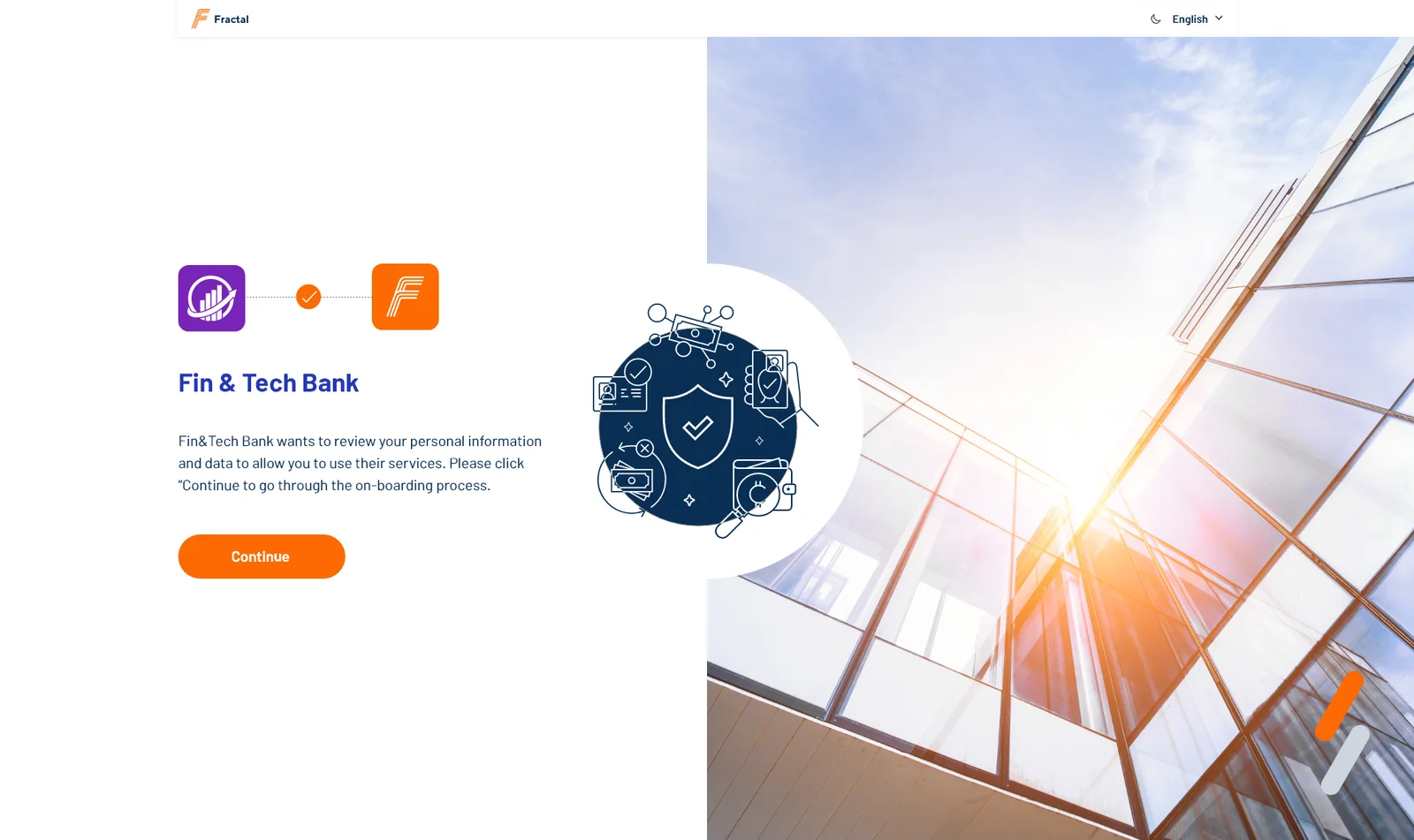
The Fractal experience often began inside a partner product.
When a partner needed to verify someone, the user was handed off to Fractal ID. I designed the authorization step that presented this transition: the screen identified the partner requesting access, explained which verified information was required, and asked for the user's consent before continuing.
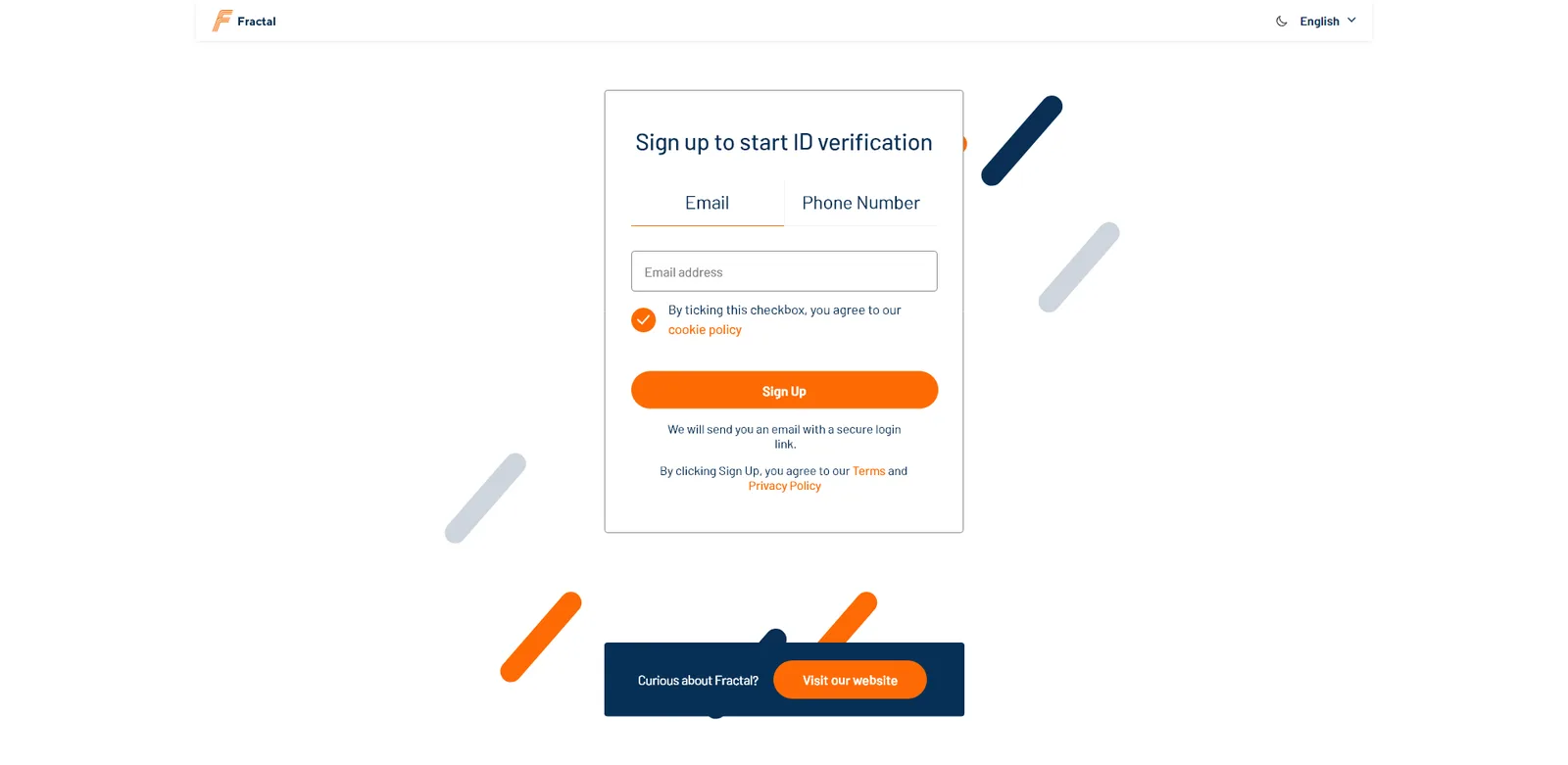
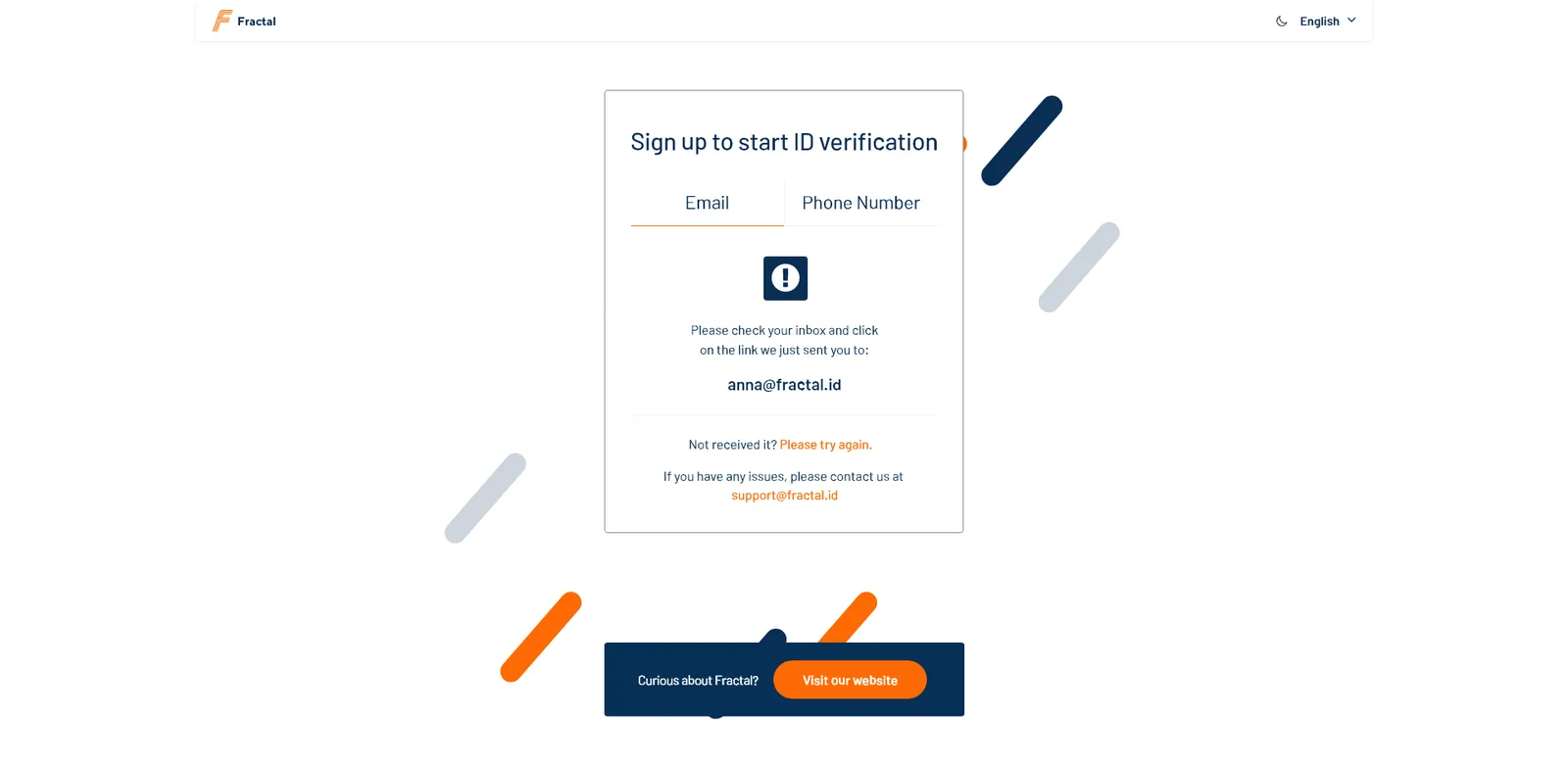
Once they consented, the user could create a Fractal account with an email address or a phone number. The experience required no password; instead, Fractal sent a secure login link. These first screens prepared the user for verification and made the relationship between Fractal, the partner and their personal data clearer.
Guidance during identity verification
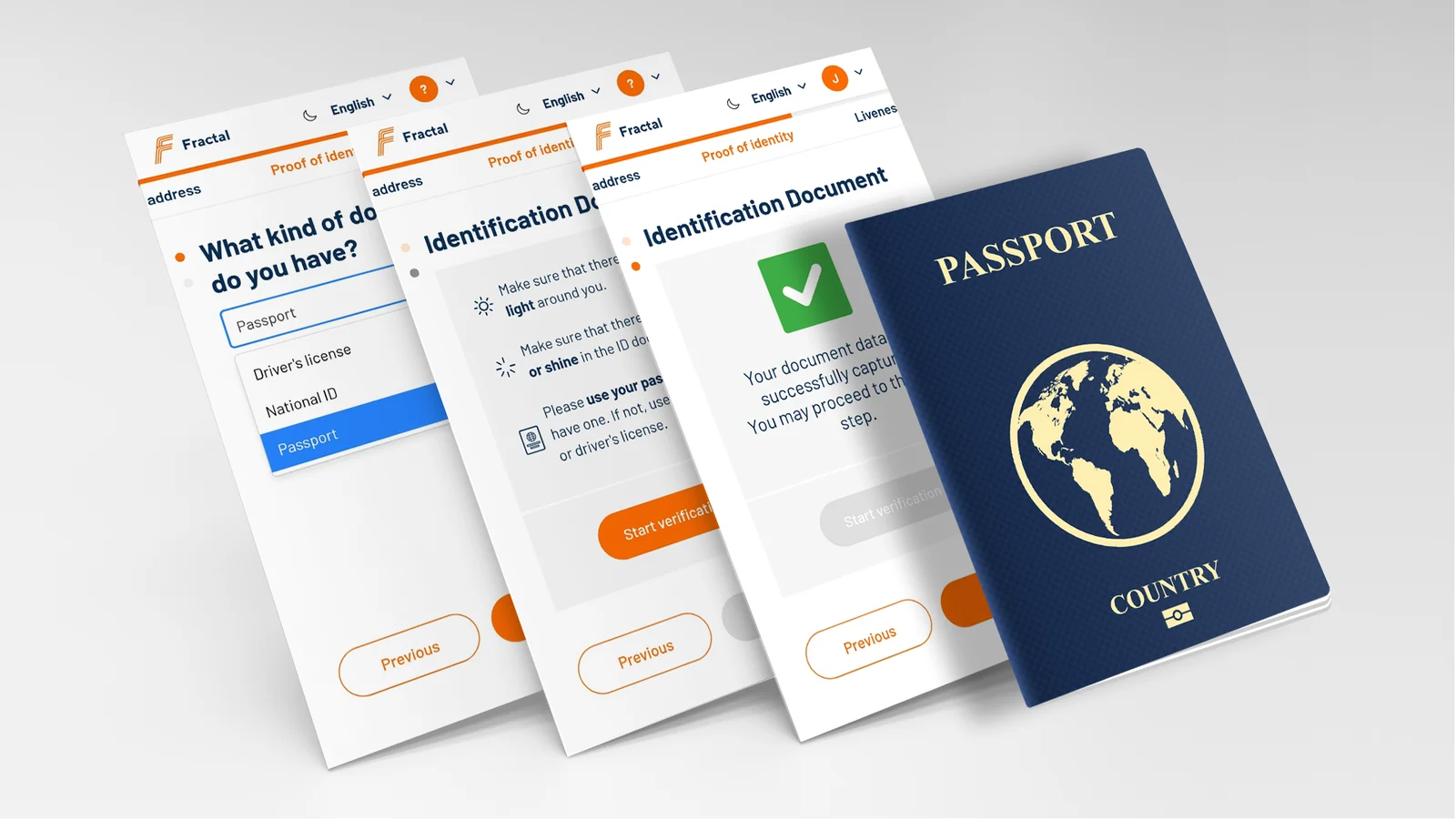
Verification required an ID document and a liveness check, steps that compliance made mandatory.
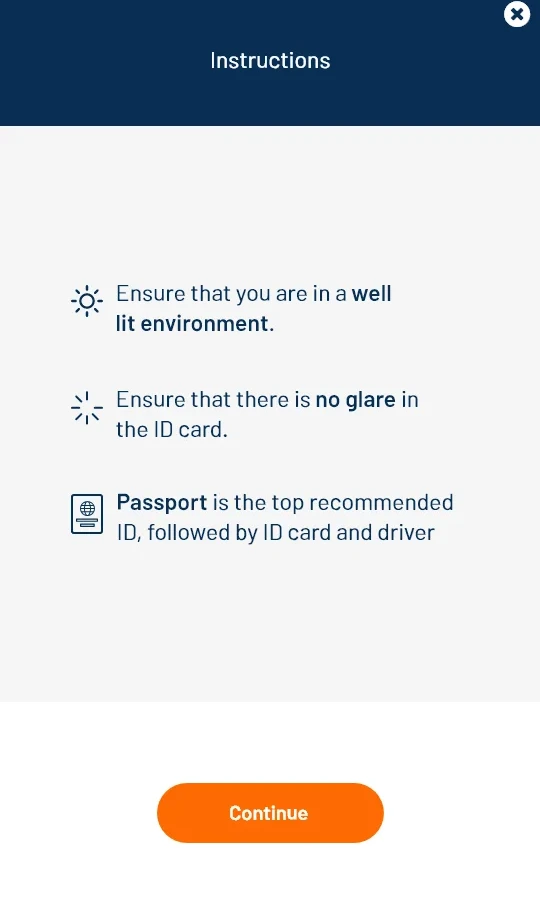
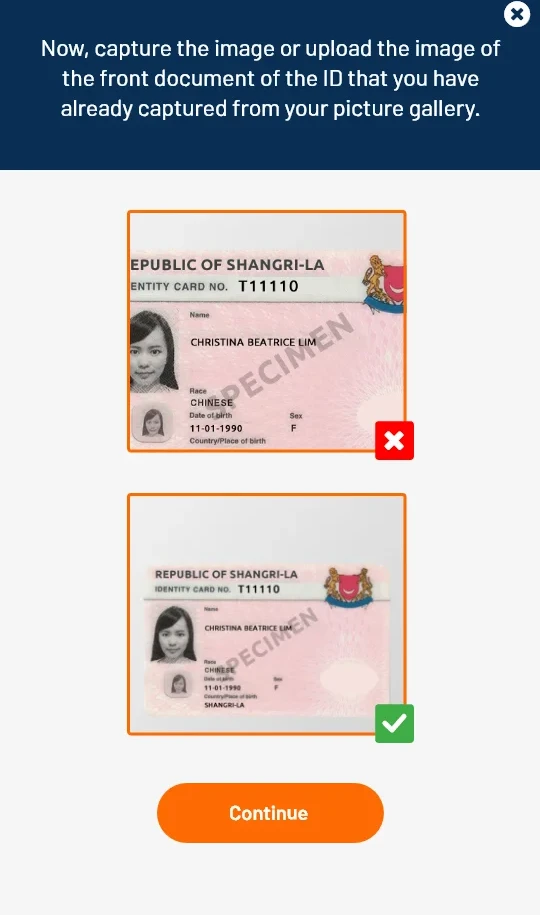
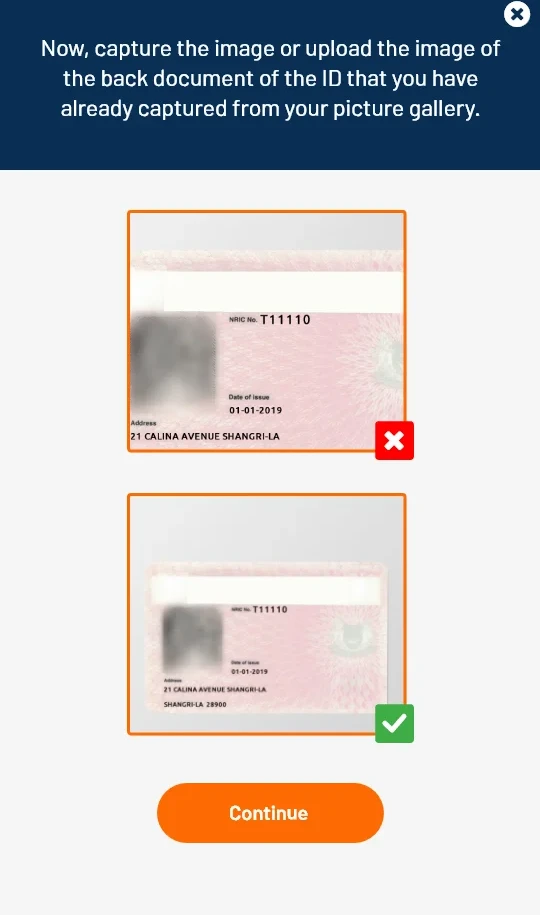
My goal was to reduce avoidable errors during capture. I organized the mobile flow into a clear sequence, and before the camera opened each screen explained what to do, comparing acceptable and incorrect examples (low light, reflections, cropped edges, poor positioning) so people could correct the conditions before taking the photo.

Partner offers and referral tracking
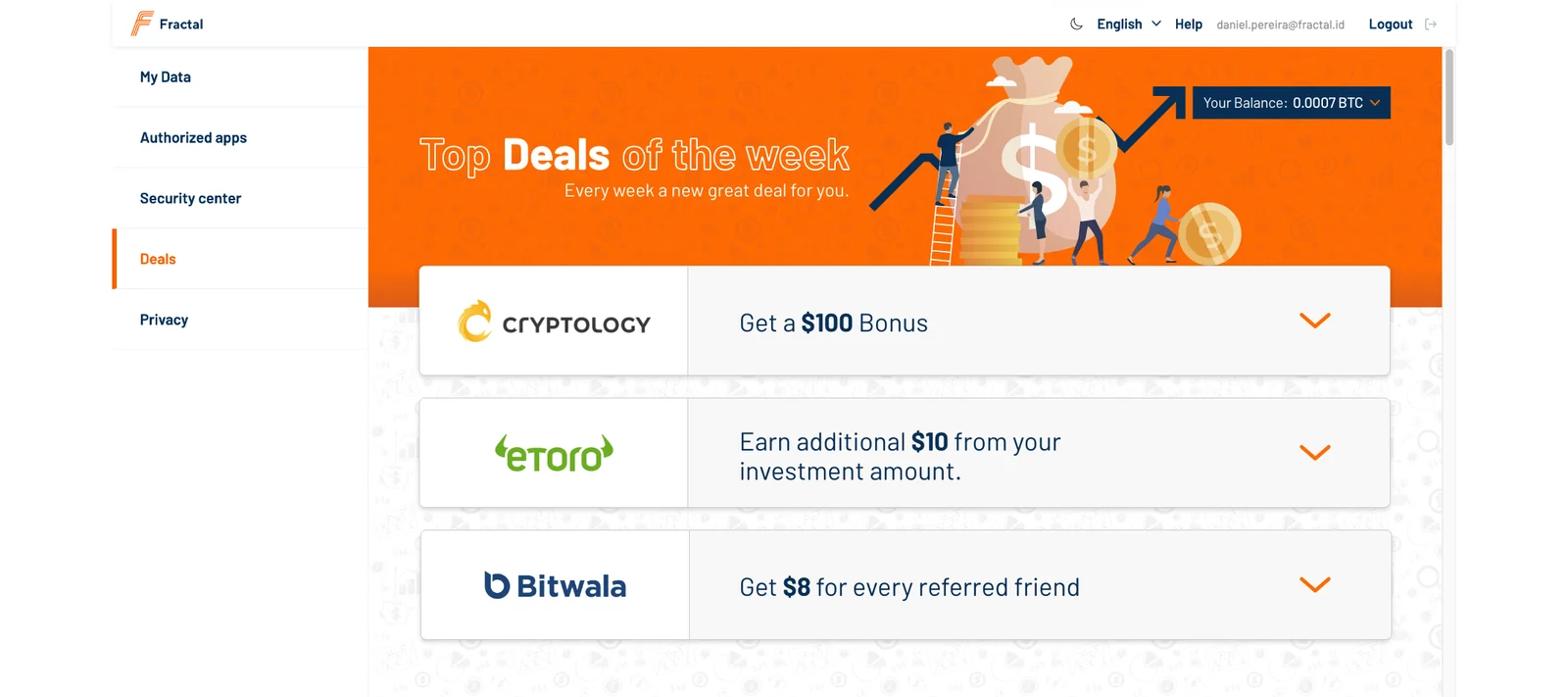
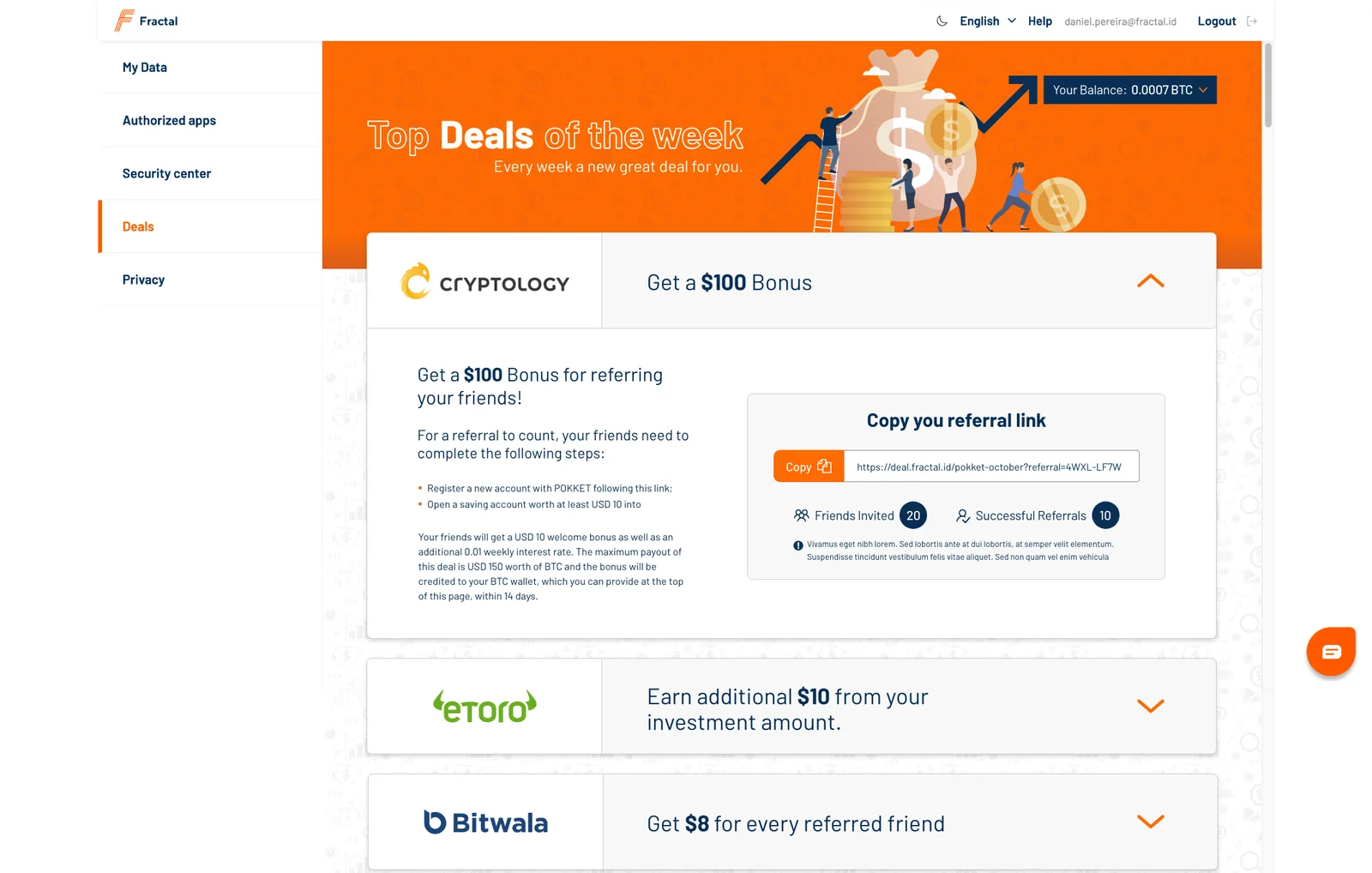
After creating an account, users could open Deals, an area dedicated to Fractal's partner campaigns.
The programme ran weekly offers from digital financial services and crypto companies such as Cryptology, eToro and Bitwala. Depending on the campaign, a user could earn a bonus for joining a service, making an investment or inviting others. I designed the offers list and its expanded state: each offer showed the partner and the possible reward, and opening it revealed the conditions to take part, an exclusive referral link, and the results so far.
A referral only counted as successful once the invited person met the partner's conditions, which could include creating an account, authorizing Fractal ID, completing identity verification, making a deposit or opening an investment product. The interface separated the people who had opened the link from those who had completed every required step, and showed the campaign cap, the expected payout date and the rewards accrued. Some campaigns paid the bonus in Bitcoin, reflected in the account balance.
My work focused on making the rules, the progress and the payout status understandable in one place. The feature gave users access to partner benefits and gave Fractal's partners a structured acquisition channel.
The company's two products
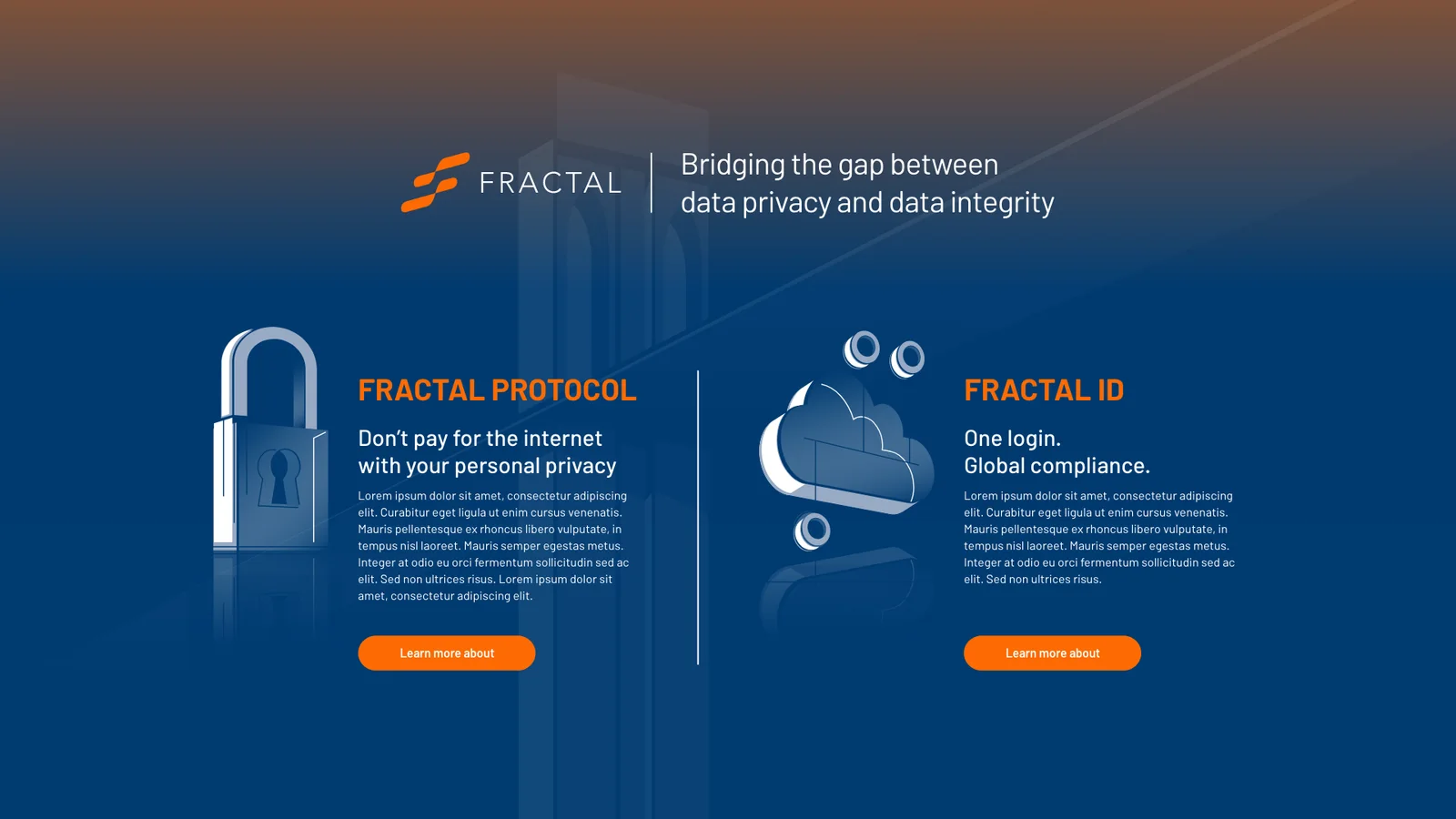
Fractal was building two products with related goals but different audiences.
Fractal ID provided identity verification and compliance services for blockchain products. Fractal Protocol was an open-source initiative focused on privacy and the exchange of behavioural data. I designed a marketing site that explained both products without collapsing them into a single proposition.
The home page introduced the company's overall purpose and gave each product its own description, visual identity and path to more information. The split structure let visitors compare the products and understand the role of each, while shared typography, colours and illustrations kept them tied to the same company.
My contribution
My work at Fractal spanned different parts of the user experience: partner authorization, account creation, identity verification, account management, referral campaigns and product communication.
The main challenge was presenting unfamiliar financial, regulatory and technical concepts without adding friction to processes that already demanded attention and effort from users.
Working on product and brand at the same time also called for consistency across experiences with different goals. Verification had to be precise and convey security, Deals had to communicate rules and progress, and the marketing site had to explain the company and its products to a broader audience.